What is Canned Dog Food and Is It Good for Your Pet?
Canned dog food has gained popularity among pet owners for its convenience and taste. Many dog owners are curious about its nutritional value. Dr. Emily Foster, a leading veterinarian in pet nutrition, states, "Canned dog food can be a great option, but not all varieties are created equal."
When choosing canned dog food, factors like quality ingredients and nutritional balance matter. Some products are filled with fillers and preservatives, which can harm your pet's health. Transparency in labels is crucial. Frequent purchases might present challenges if you realize your pet reacts negatively to certain brands.
Canned dog food can offer hydration and appealing flavors for picky eaters. However, it may not always be complete nutrition. Monitoring your dog's response is essential. Understanding what works well for your furry friend requires effort. Each pet is unique, and what benefits one may not suit another. Always ensure the chosen canned dog food aligns with your pet's specific needs.

What is Canned Dog Food?
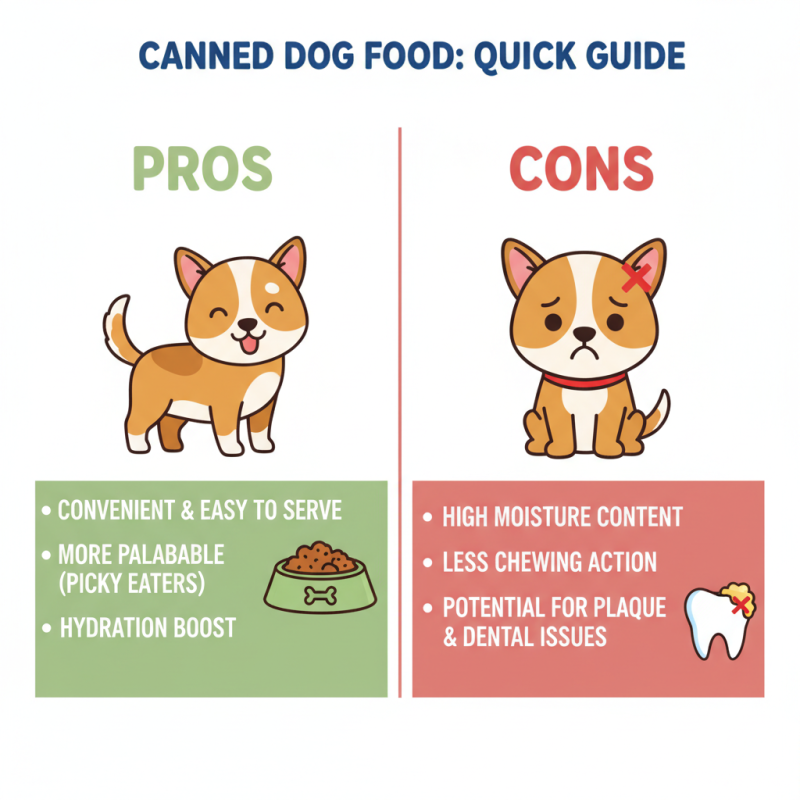
Canned dog food is a convenient option for pet owners.
It comes in a sealed container, keeping the contents fresh and safe. Many owners choose this type of food because it has a
longer shelf life compared to dry kibble. It can be easy
to serve and less messy, appealing to those with busy lives.
The ingredients in canned dog food vary. Some are filled with meat, vegetables, and grains, while others contain fillers that
may not be ideal for every dog. Therefore, it is important to read the labels carefully.
High moisture content can benefit dogs, especially those who struggle to drink enough water. But owners should still ensure
their pet’s balanced diet.
However, there are some downsides to canned food. It can be more costly than dry options. Some dogs may even refuse to eat
it if they are used to kibble. Texture and taste play a significant role in a
pet's preference. Experimentation may be needed to find what suits your pup best.
Understanding these factors can lead to better feeding choices for your furry friend.
Nutritional Benefits of Canned Dog Food
Canned dog food offers various nutritional benefits for pets. It typically contains a balance of protein, fats, and carbohydrates. Moisture content is higher in canned food, which helps keep dogs hydrated. This is especially important for older pets or those that don’t drink enough water.
A notable aspect of canned food is its appealing aroma. Many dogs are drawn to the smell, making it an excellent option for picky eaters. The texture is also softer, which can ease chewing for dogs with dental issues. However, not all canned foods are created equal. Some might contain fillers or low-quality ingredients.
Tips: Always check the ingredient list. Look for real meat as the first ingredient. If your pet has specific health needs, consult your veterinarian. Gradually introduce canned food into your dog's diet to prevent digestive upset. Keep an eye on your pet’s weight, as higher calorie content can lead to overeating.
Comparison with Dry Dog Food
Canned dog food and dry dog food each have their benefits. Canned food often contains higher moisture content. Many dogs benefit from this hydration, especially those prone to urinary issues. According to the Association of American Feed Control Officials, moisture content in canned food can reach 75%. This is significantly higher than the 10% found in most dry options.
Canned food is typically more palatable. Dogs often prefer the taste, which can be crucial for picky eaters. However, it can be more expensive than dry kibble. The American Kennel Club notes that dry food is generally more cost-effective over time. It’s easier to store and can last longer without spoiling. Many owners struggle with the balance of nutrition and cost.
On the nutrition front, canned food may contain fewer carbohydrates. This aligns with the dietary needs of many dogs. Yet, some formulations can be high in fat or sodium. Owners should read labels carefully. Combos of both types, when done right, can provide a well-rounded diet. It’s essential to assess your pet's health and preferences to make the best choice.
How to Choose the Right Canned Dog Food for Your Pet
Choosing the right canned dog food can be overwhelming. There are countless options available. Understanding your pet's dietary needs is crucial. Start by looking at the ingredients. High-quality proteins should be near the top of the list. Meat, fish, or poultry should be primary sources. Look for foods without fillers or artificial additives.
Consider the specific needs of your dog. Age, size, and activity level matter. Older dogs may require different nutrients than puppies. A highly active dog might need more protein. It’s essential to read labels carefully. You want to ensure your pet gets a balanced diet. Sometimes, what looks good on the label may not be the best for your dog.
Don't forget to observe your pet after switching foods. Changes in behavior or digestion can signal issues. It might take time to find the right fit. You may need to try several brands. Patience and observation are key. Remember, every dog is unique. What works for one may not suit another.
What is Canned Dog Food and Is It Good for Your Pet? - How to Choose the Right Canned Dog Food for Your Pet
| Nutritional Element |
Importance |
Recommended Amount (%) |
| Protein |
Essential for growth and muscle development |
20-30% |
| Fat |
Provides energy and supports skin and coat health |
8-15% |
| Carbohydrates |
Support energy levels and digestive health |
20-50% |
| Fiber |
Aids in digestion and helps maintain healthy bowel movements |
2-5% |
| Vitamins & Minerals |
Support overall health and immune function |
Varies by formulation |